

✅ Tabas; A City Whose History Was Written by the Earth
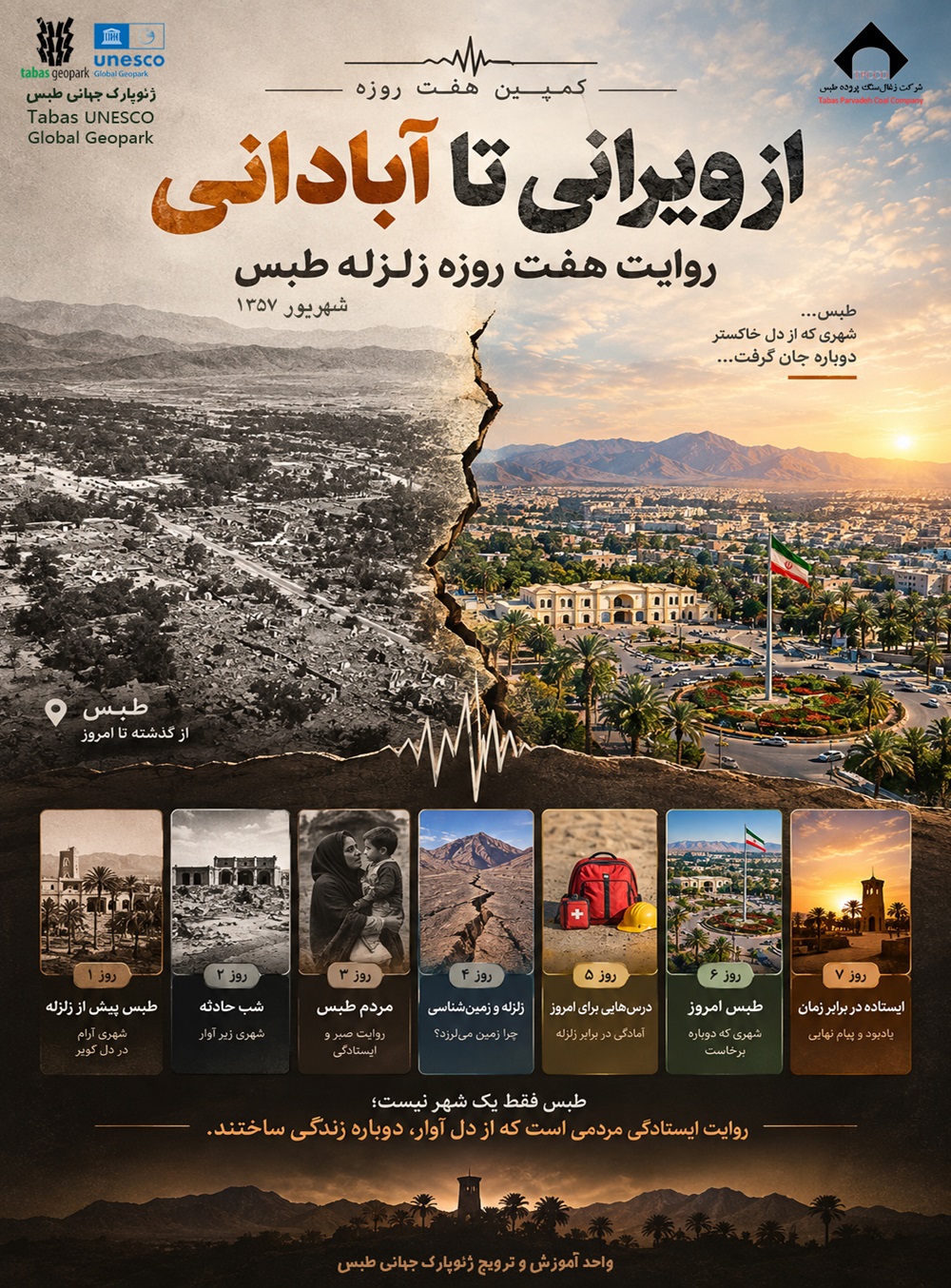
🔹 As we approach the anniversary of one of the darkest events in the contemporary history of Tabas, we are launching a campaign dedicated to remembrance, storytelling, and raising awareness about the devastating earthquake of September 16, 1978 (25 Shahrivar 1357).
🔸 The Tabas earthquake was not merely a natural disaster;
it was a story of loss, resilience, solidarity, and rising again—a story of people who, in the aftermath of the catastrophe, rebuilt their lives from the ruins.
❇️ Throughout the coming days, through a review of photographs, personal accounts, and historical facts, we will revisit parts of the story of the Tabas earthquake;
from Tabas before the earthquake to the city that emerged with a new face in its aftermath.
🕊️ In memory of those who lost their lives in the Tabas earthquake,
and with respect for the people who stood strong again from the depths of devastation.
🔹 Together, we begin this journey of remembrance…
🔸 From Devastation to Renewal
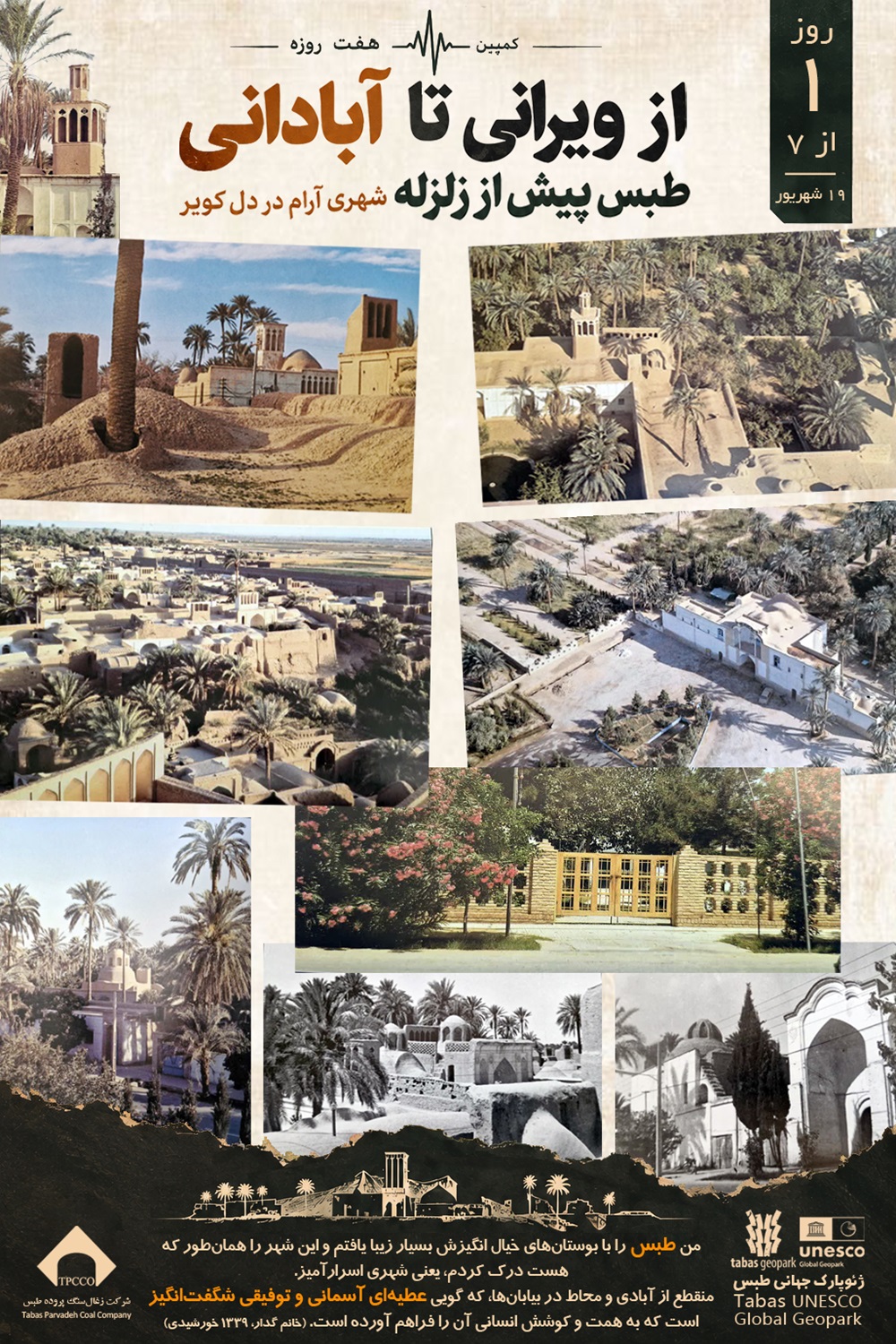
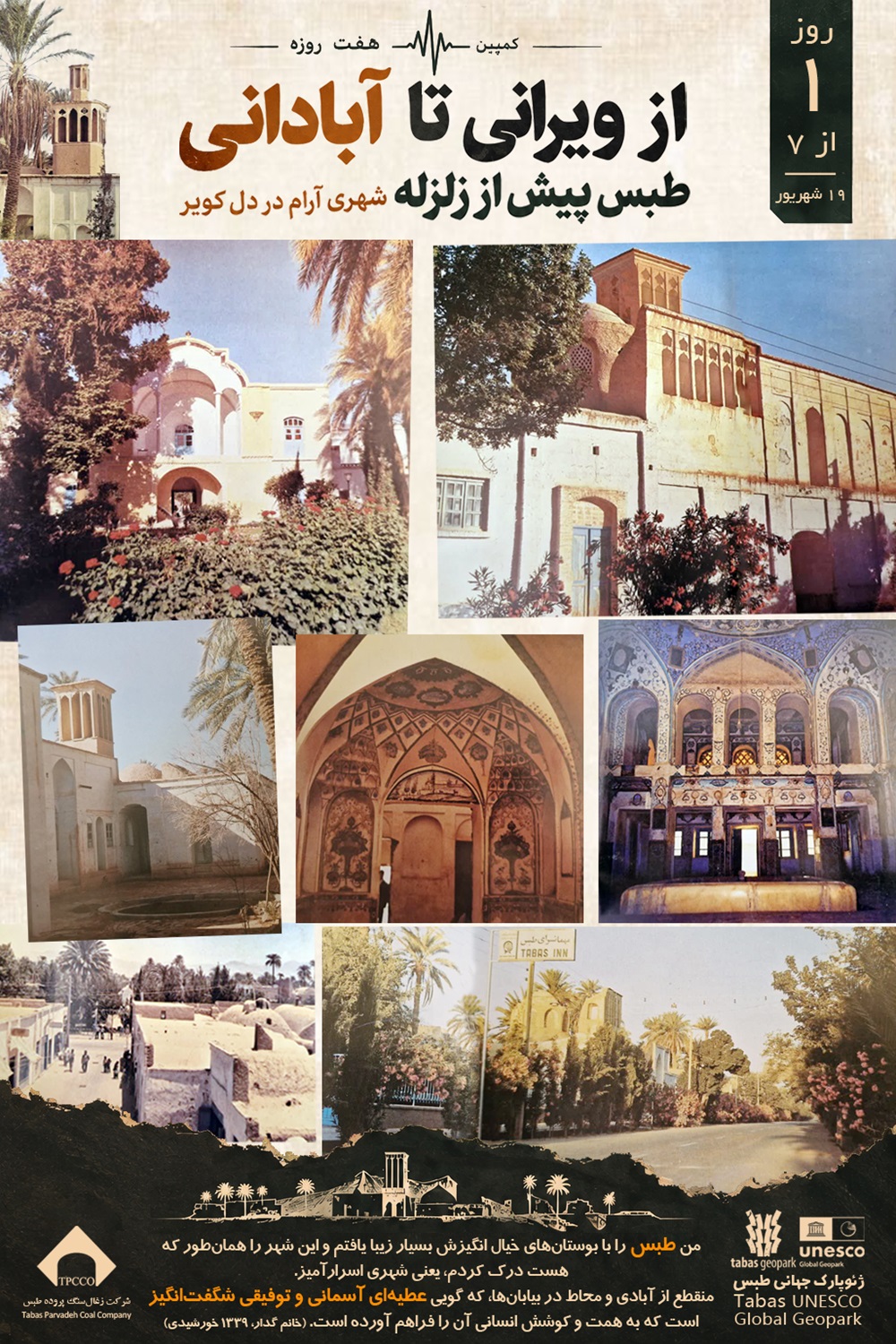
❇️ The Harmony of Tabas Architecture with Nature and Palm Trees
🔹 A note by Dr. Yaghoub Daneshdoost on the architecture of Tabas intertwined with its palm trees:
✍🏼 Given that one of the strong traditions among the people of Tabas is to consider cutting down trees—especially date palms—undesirable and even a kind of sin, palm trees are never cut down to make way for buildings.
As the city has expanded within existing palm groves, and architects have therefore been obliged to preserve the palm trees, the result is a remarkable blend of architecture and palm trees—so much so that one cannot imagine the two as separate from each other.
🟢 Perhaps this is precisely the long-standing aspiration of blending architecture with nature, which has been remarkably brought to life in the city of Tabas.
📷 Photo: Dr. Yaghoub Daneshdoost
❇️ Tabas, the Pearl of Iranian Cities
🔹 Part of the writings of the Swedish explorer and geographer Sven Hedin (1906), describing the beauty of the city of Tabas:
✍🏼 “… I am looking forward to seeing a real paradise.
Tabas, this extraordinary city, lies before us with its towers, walls, and its tall minaret, which rises higher than everything around it like a lighthouse. The city wall, with its round towers and moat, presents a fascinating sight.
Nothing can be more delightful than an oasis in the desert, and no oasis can be more beautiful than Tabas. To the desert traveler, who arrives there after a long and unfamiliar journey, Tabas is a captivating and heavenly oasis…
An extremely long and perfectly straight street leads to the city square. Considering the circumstances of Iran, some of the houses are beautiful.
🟢 It can confidently be said that Tabas, despite its forgotten solitude and abandonment, is the pearl of the cities of Iran.
📷 Photo: Dr. Yaghoub Daneshdoost
✅ From Destruction to Reconstruction
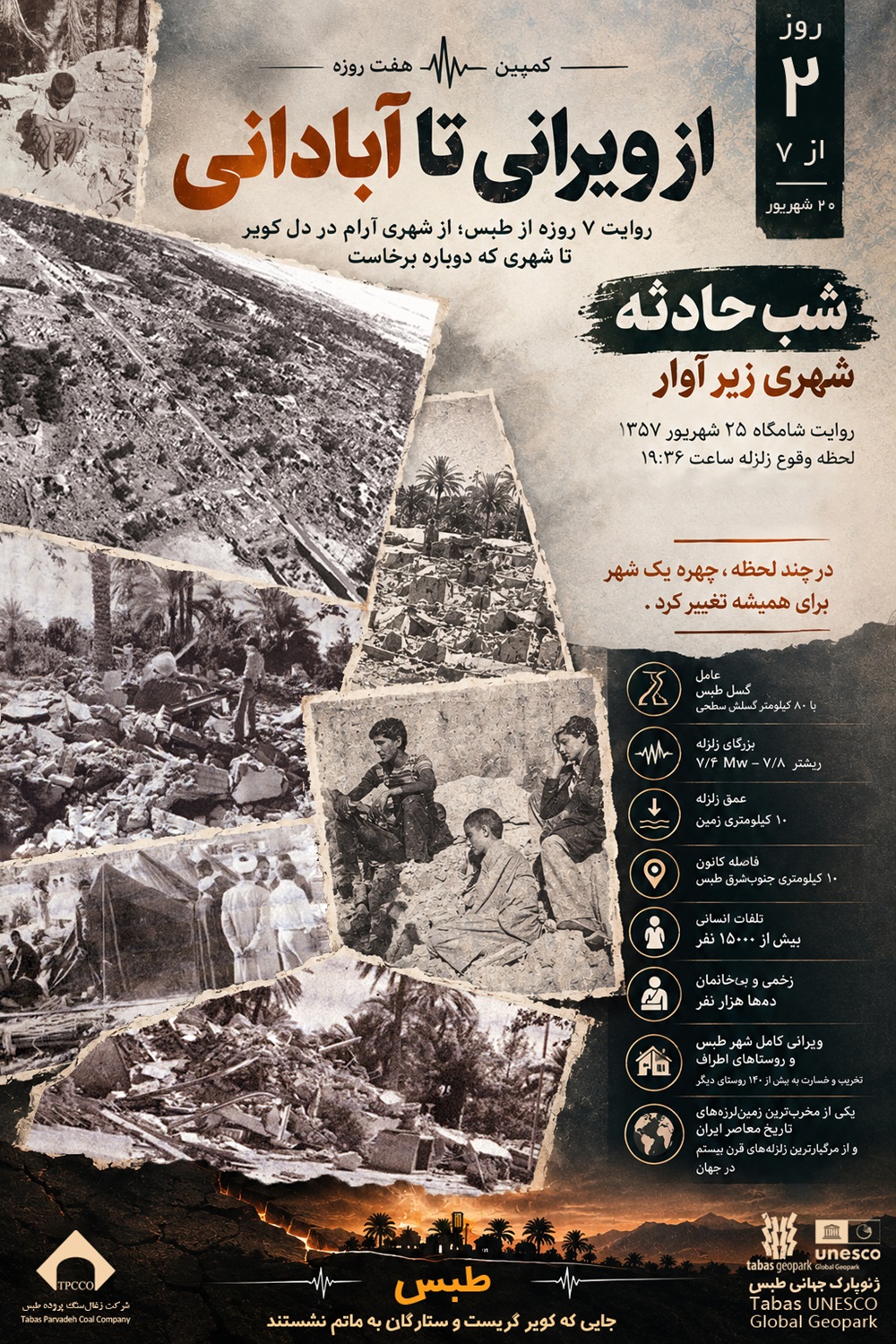
2⃣ Day Two | The Night of the Disaster
🌴 A City Buried Under the Rubble
🔹 September 16 — 7:36 PM
People were at home.
The city was quiet.
Suddenly, a sound rose from deep within the earth.
Walls shook…
Roofs collapsed…
The lights went out.
◾️ In the darkness, Tabas was filled with the voices of people calling out for their loved ones.
Mothers searched for their children.
Children searched for their parents.
Neighbors tried to clear the rubble with their bare hands.
◾️ It lasted only a few minutes;
but for the people of Tabas,
those few minutes felt like a lifetime.
◾️ That night, it was not only the city that was destroyed;
thousands of lives, memories, and families were buried beneath the rubble. 🕯️
And when morning came,
Tabas was no longer the same city it had been the night before. 🖤
“In just a few moments, the face of a city changed forever.”
🔹 From Destruction to Reconstruction
🔸 A seven-day journey through Tabas;
from a peaceful city in the heart of the desert to a city that rose again.
✅ From Destruction to Reconstruction
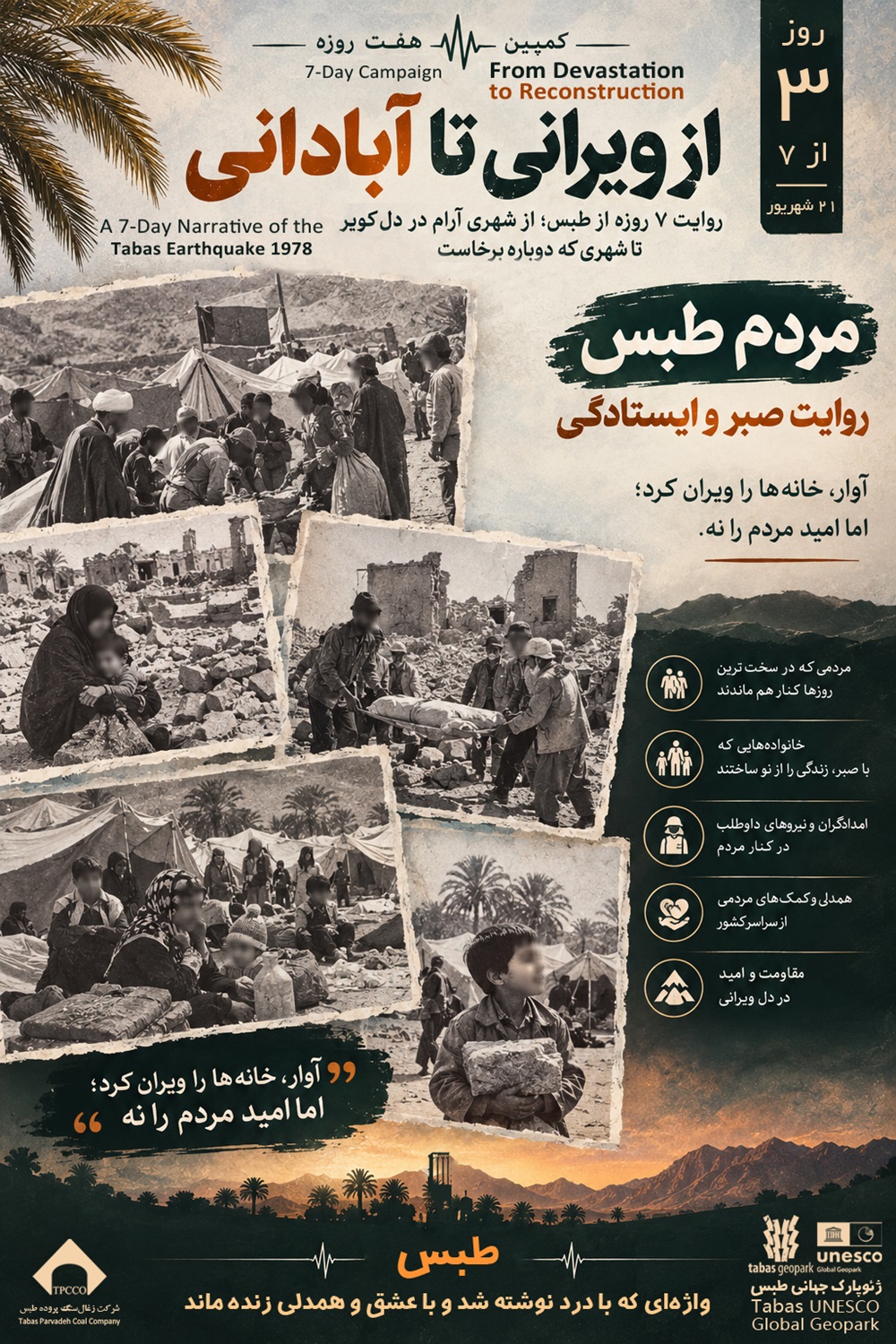
3⃣ Day Three | The People of Tabas
🌴 A Story of Patience and Resilience
🔹 After that horrifying night, when the earth finally fell silent and the city was left amid rubble and silence, the people of Tabas remained — grieving, suffering, but still holding on to hope.
🔸 Families who had lost their loved ones stood alongside the survivors. The people, rescue workers, and relief teams searched through the rubble — striving to save every life and find every sign of survival.
🔹 In the days following the earthquake, Tabas was not merely a devastated city; it was a city whose people tried to rebuild their lives from among the ruins.
🔸 The compassion, solidarity, mutual support, and resilience of the people remain an enduring part of the story of the Tabas earthquake — a story that shows that even in the darkest moments, people can keep the light of hope alive.
🔹 The rubble destroyed homes, but it did not destroy the people’s hope.
And perhaps the story of Tabas began right here;
🔸 from among the ruins, with people who chose to stand again.
🔹 From Destruction to Reconstruction
🔸 A seven-day journey through Tabas; from a peaceful city in the heart of the desert to a city that rose again.
✅ From Destruction to Reconstruction
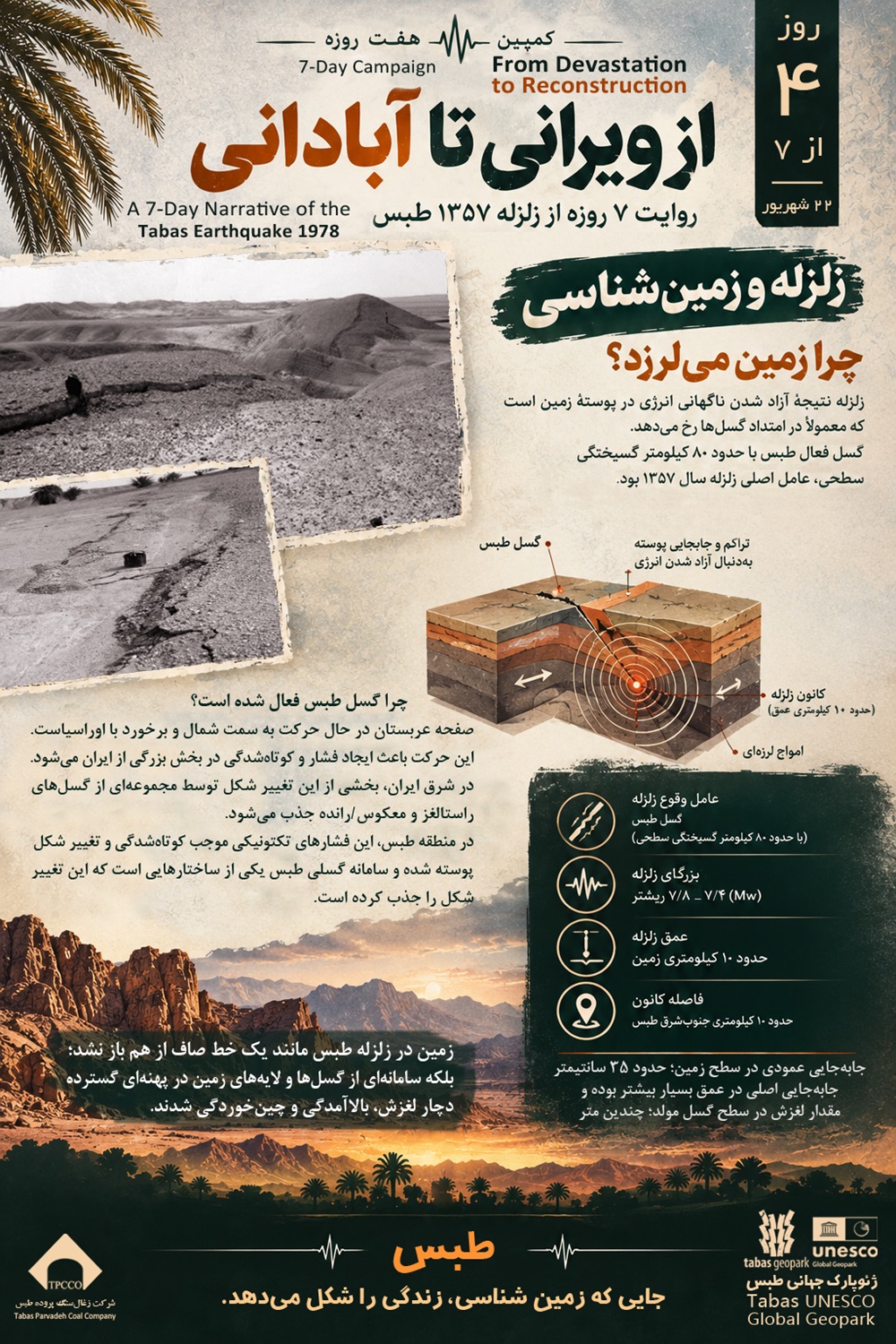
4️⃣ Day Four | Earthquakes & Geology 🌴 Why Does the Earth Shake?
🔹 The Earth is not always calm and still. Beneath our feet, tectonic plates are constantly moving, and along faults, stress and energy gradually accumulate within the rocks. When this energy is suddenly released, seismic waves travel through the Earth, and we experience them as an earthquake.
🔸 The Tabas earthquake was the result of the activation of a fault and the sudden release of energy stored in the Earth’s crust—an event accompanied by extensive surface rupture.
❇ Why is this important for Tabas UNESCO Global Geopark?
🔹 A geopark is not simply a collection of scenic attractions. It is a place where we can understand the story of the Earth and the processes that have shaped its surface over millions of years, and share that story with the public. Faults, geological structures, and evidence of seismic activity are all part of this story.
🔸 Earthquakes remind us that the Earth is alive and constantly changing. Understanding these processes not only helps us better appreciate the history of our planet, but also teaches us how to be more informed and better prepared for natural hazards.
🔸 A 7-Day Story of Tabas; from a peaceful city in the heart of the desert to a city that rose again.
✅ From Destruction to Reconstruction
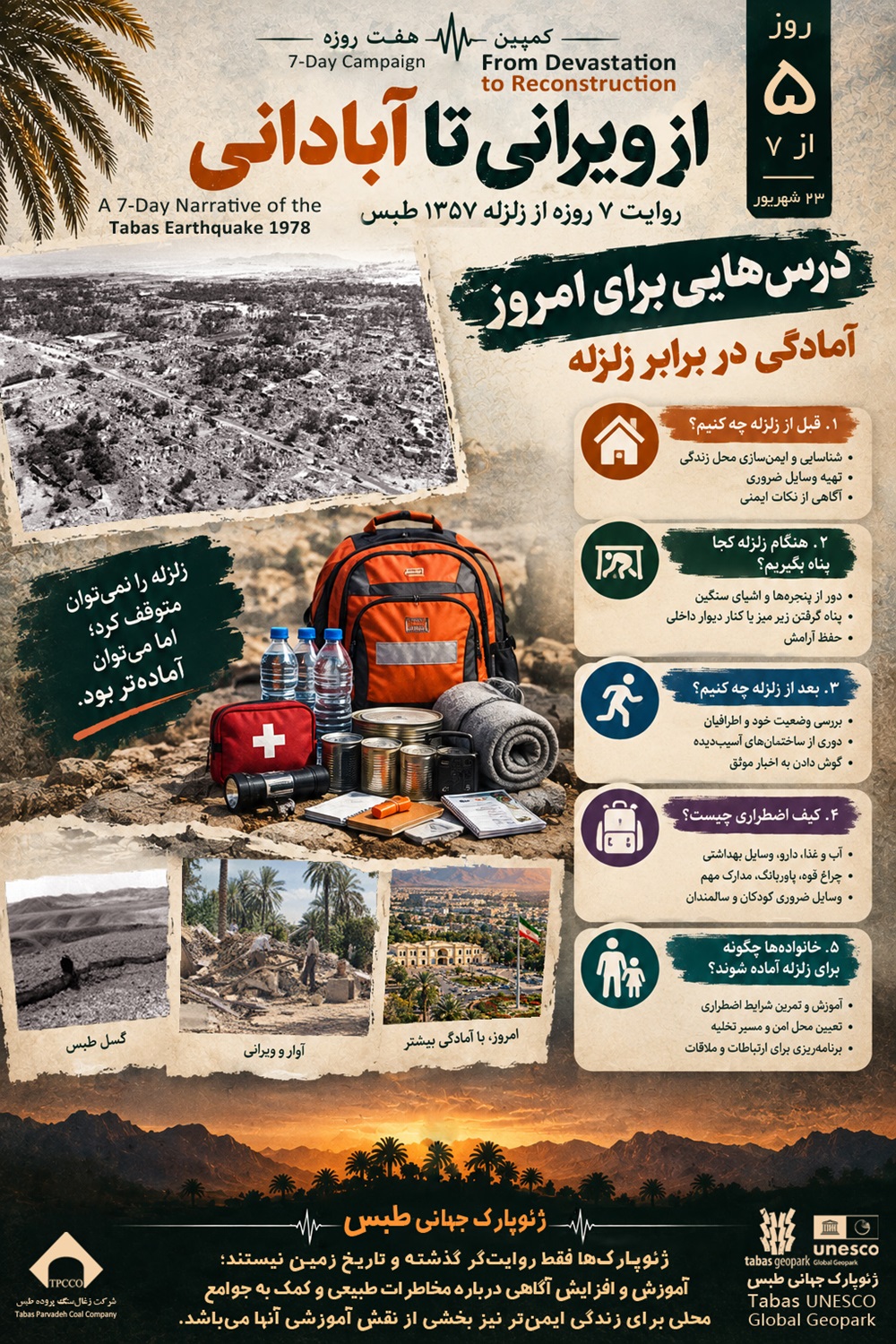
5⃣ Day 5 | Lessons for Today
🌴 Earthquake Preparedness
🔹 Earthquakes cannot be predicted or stopped; however, we can be better prepared for the moment when the ground starts to shake.
🔹 Preparedness begins today—from identifying hazards at home and in the workplace to learning a few simple actions that can save lives in critical moments.
❇ Geoparks and Hazard Preparedness
🔹 Geoparks are not only storytellers of the Earth’s past and history; educating communities, raising awareness about natural hazards, and helping local communities live more safely are also part of their educational role.
🔺 The Tabas earthquake, alongside the memory it left behind, holds an important lesson for us today:
“Earthquakes cannot be stopped; but we can be better prepared.”
🔸 A 7-Day Story of Tabas: From a peaceful city in the heart of the desert to a city that rose again.
✅ From Destruction to Reconstruction; A 7-Day Story of Tabas
🔶 Geoparks and Earthquake Preparedness
🔹 Preparedness begins today—from identifying hazards at home and in the workplace to learning a few simple actions that can save lives in critical moments.
🔸 Before an Earthquake:
Identify safe areas in your home, secure heavy objects, and familiarize yourself with evacuation routes.
🔸 During an Earthquake:
Drop, Cover, and Hold On. Stay away from windows, cabinets, and hazardous objects, and do not leave your safe place until the shaking has stopped.
🔸 After an Earthquake:
Stay calm and be alert for aftershocks. If possible, check the gas and electricity systems and help injured people. Stay away from damaged buildings.
🔸 Emergency Kit:
Water, non-perishable food, a flashlight, batteries, a first-aid kit, essential medications, and communication devices are among the important items to include in an emergency kit.
🔸 Family Preparedness:
Discuss in advance with your family the safe place, evacuation routes, meeting point, and communication methods to use in an emergency.
🔺 The Tabas earthquake reminds us of the importance of understanding the Earth and its hazards.
🔹 Understanding the Earth is the first step toward understanding risk; geoparks can turn this knowledge into greater public awareness and preparedness for natural hazards.
✅ From Devastation to Reconstruction
6⃣ Day Six | Tabas Today
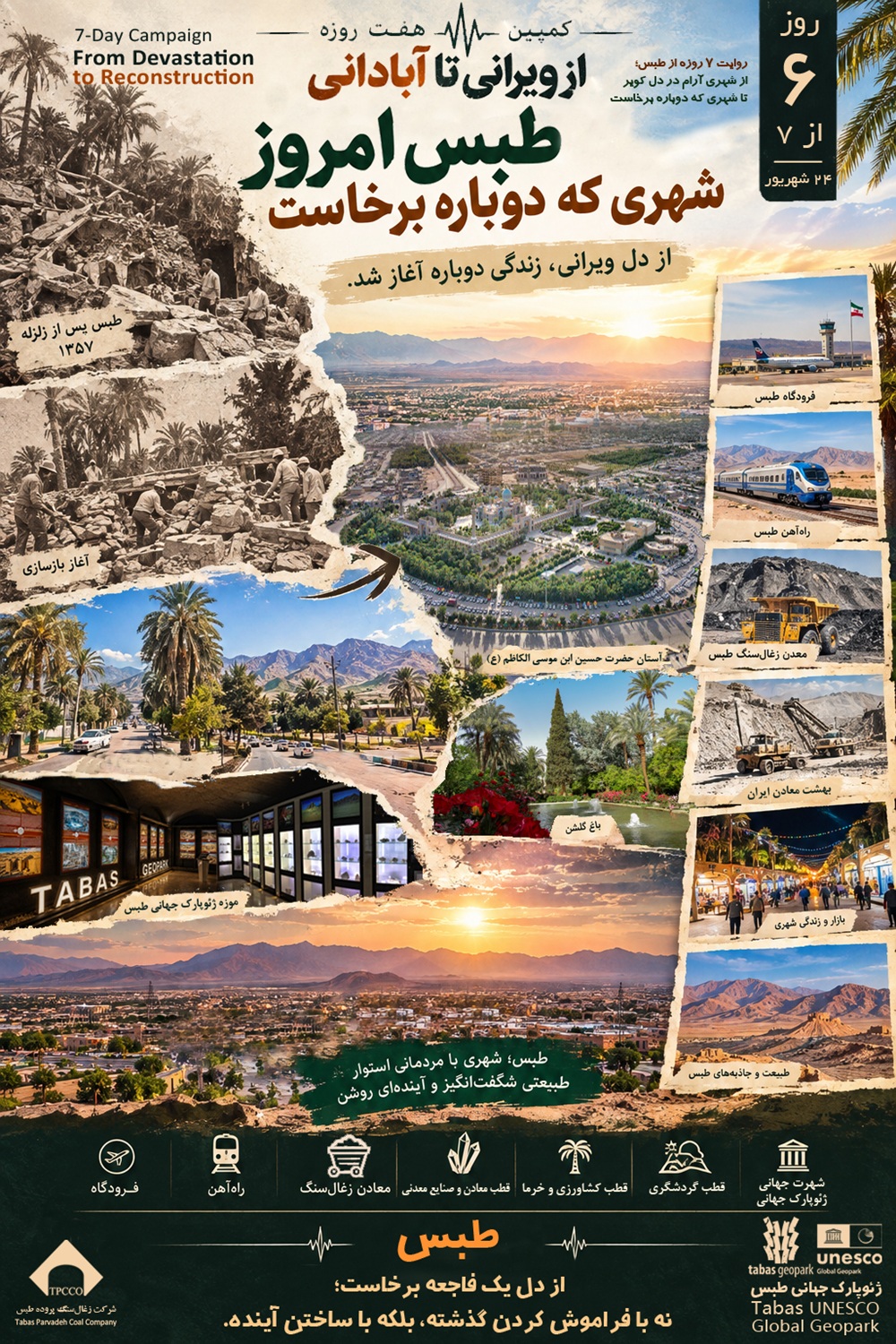
🌴 A City That Rose Again
🔹 September 16, 1978, Tabas was plunged into devastation and grief; but that was not the end of the city’s story.
🔸 From the very first days after the earthquake, the vision of rebuilding and bringing life back began to take shape. A new city emerged; streets came alive again, homes were rebuilt, and little by little, life returned to Tabas.
🔹 Generations have grown up who may never have witnessed that night, yet the city standing today amid palm groves, gardens, and the desert is part of that same story of resilience and reconstruction.
🔸 Today, Tabas is a vibrant city with communication and transportation infrastructure, as well as mining, industrial, and agricultural potential. It is home to a Global Geopark and an international distinction, along with historical and natural attractions, green spaces, and the fourth most important pilgrimage city in Iran. A city that, while preserving the memory of its past, continues along its path toward development and a brighter future.
🔺 Tabas rose from the heart of a disaster—not by forgetting the past, but by building the future.
🔹 From Devastation to Reconstruction
🔸 A 7-day story of Tabas; from a quiet city in the heart of the desert to a city that rose again.
✅ From Destruction to Renewal
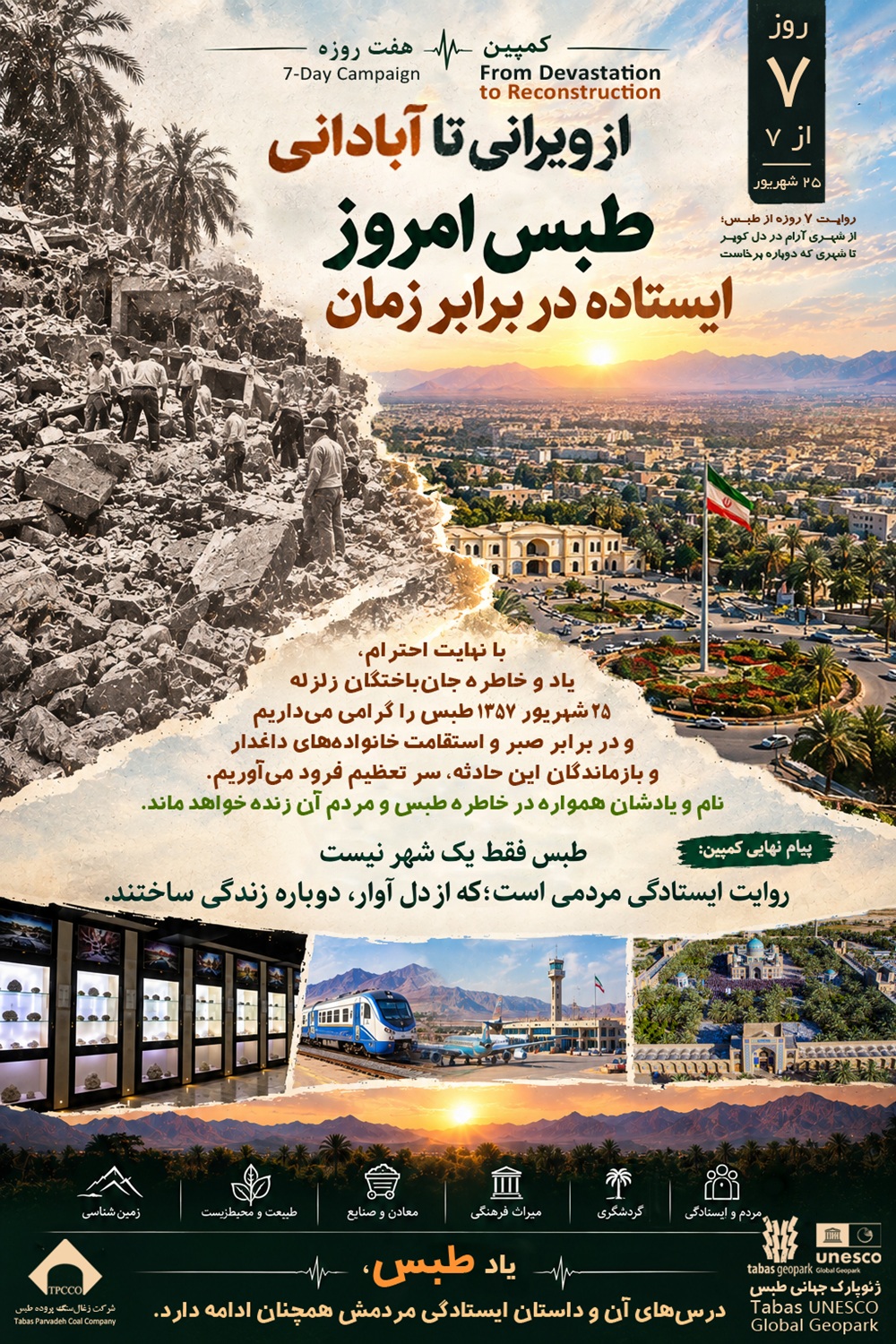
7️⃣ Day Seven | Standing the Test of Time
🔹 Seven days of the story of Tabas have passed; from a peaceful city in the heart of the desert, to the night when the earth shook and left devastation behind, and then to the people who rose again from the rubble and rebuilt their lives from the ground up.
🔸 With respect and sorrow, we commemorate the memory of those who lost their lives in the 25 Shahrivar 1357 (September 16, 1978) Tabas earthquake, and we bow our heads in tribute to the patience and resilience of the bereaved families and survivors of this tragedy.
🔸 The Tabas earthquake reminds us of an important truth: living alongside nature and the Earth requires an understanding of hazards and greater preparedness. Understanding geological processes, raising awareness of natural hazards, and learning ways to reduce vulnerability are part of the responsibility of today’s society.
🔹 In this context, the Tabas UNESCO Global Geopark, by introducing the story of the Earth, enhancing understanding of geological phenomena and hazards, and promoting relevant educational programs, plays its part in increasing public awareness and helping build a more informed and better-prepared community.
🔺 Tabas is more than just a city; it is the story of a resilient people who rebuilt their lives from the rubble.