International Caves and Karst Day
Exploring the Karst Heritage of Tabas UNESCO Global Geopark
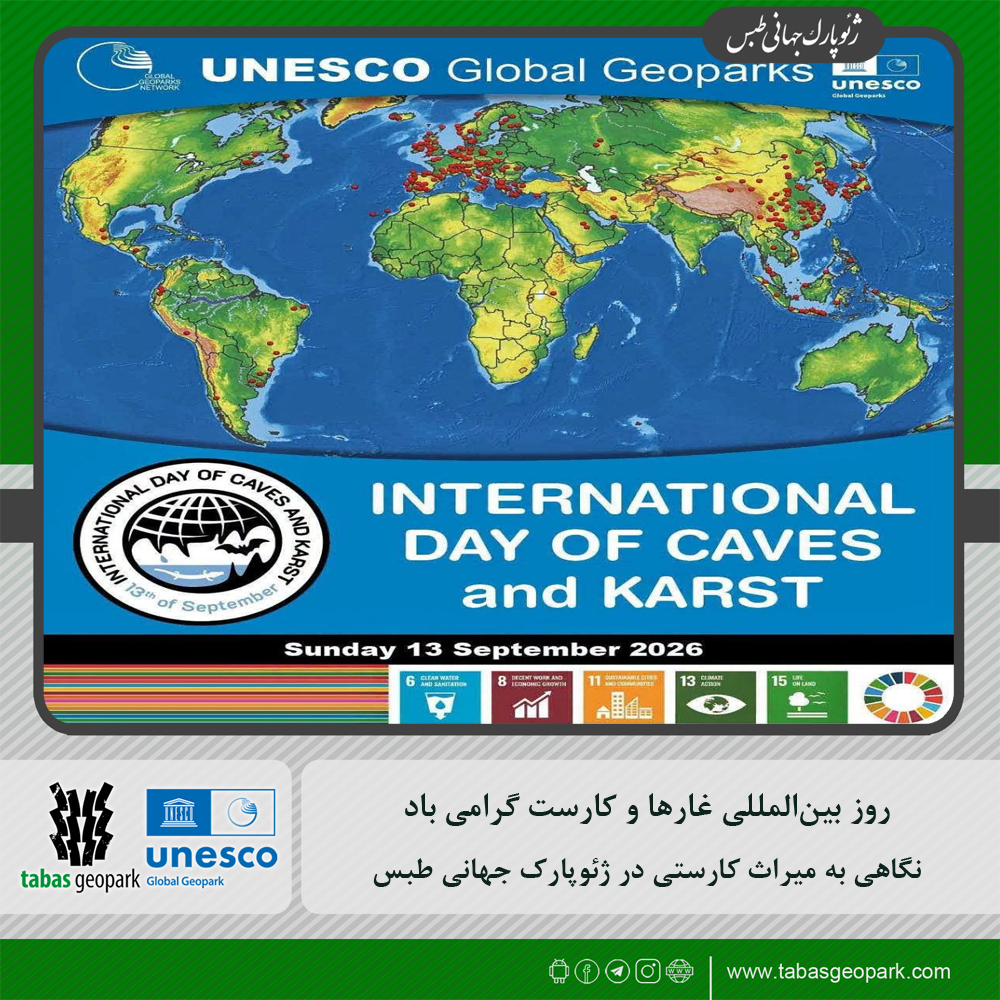
September 13 is International Caves and Karst Day, an opportunity to raise awareness of the importance of caves and karst landscapes and their role in water resources and biodiversity, while highlighting the need for their study and conservation.
Although large caves and extensive cave systems are not among the most prominent geological features of Tabas UNESCO Global Geopark, karst features and processes (the dissolution and erosion of soluble rocks, particularly limestone) play an important role in the geodiversity of the geopark.
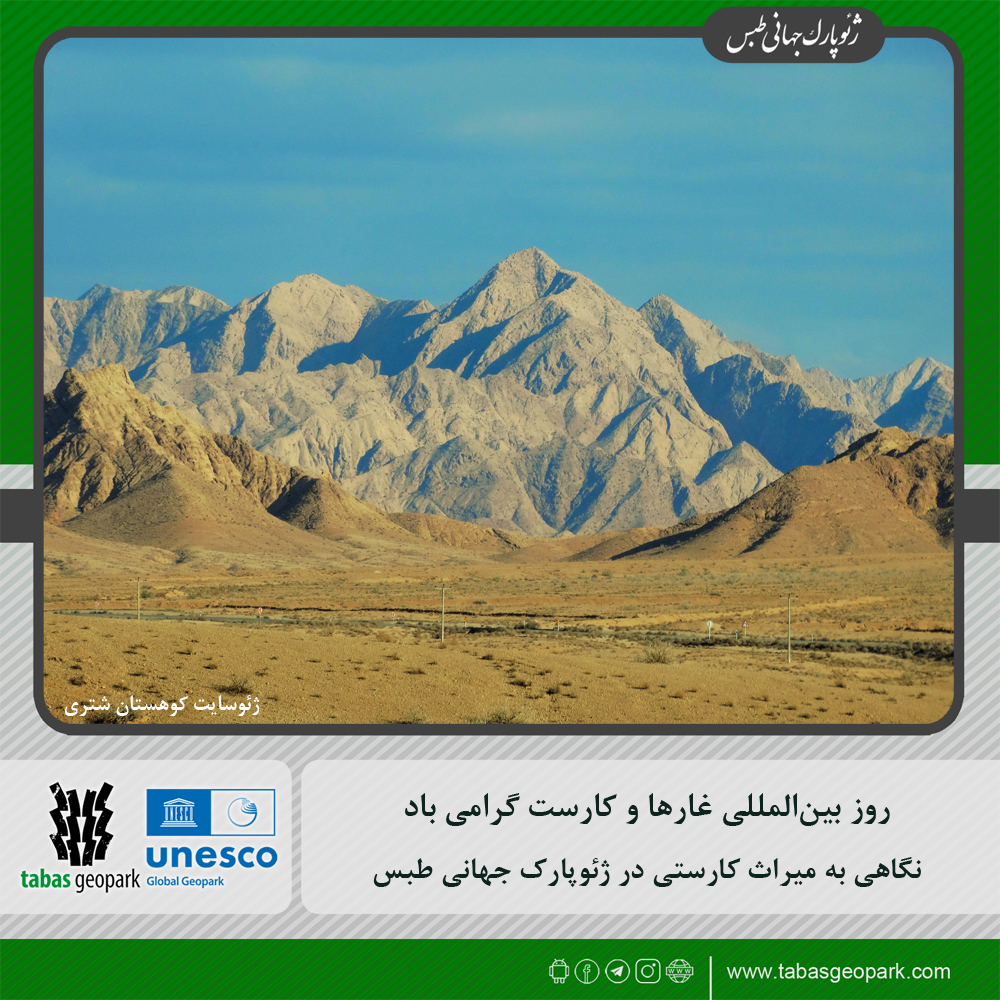
The Shotori Mountain Geosite is one of the most important karst areas in eastern Iran. Approximately 53% of the geosite is underlain by carbonate formations. The dissolution of these rocks and the circulation of water through fractures and joints have provided favorable conditions for the development of karst processes.
Alongside these karst landscapes, Tabas UNESCO Global Geopark also includes several examples of karst caves, including Kaftar Cave, Jamal Cave, Malvand Cave (known as Hassan Sabbah Castle), and Div Cave. These caves represent part of the region’s diverse karst features and geological heritage.
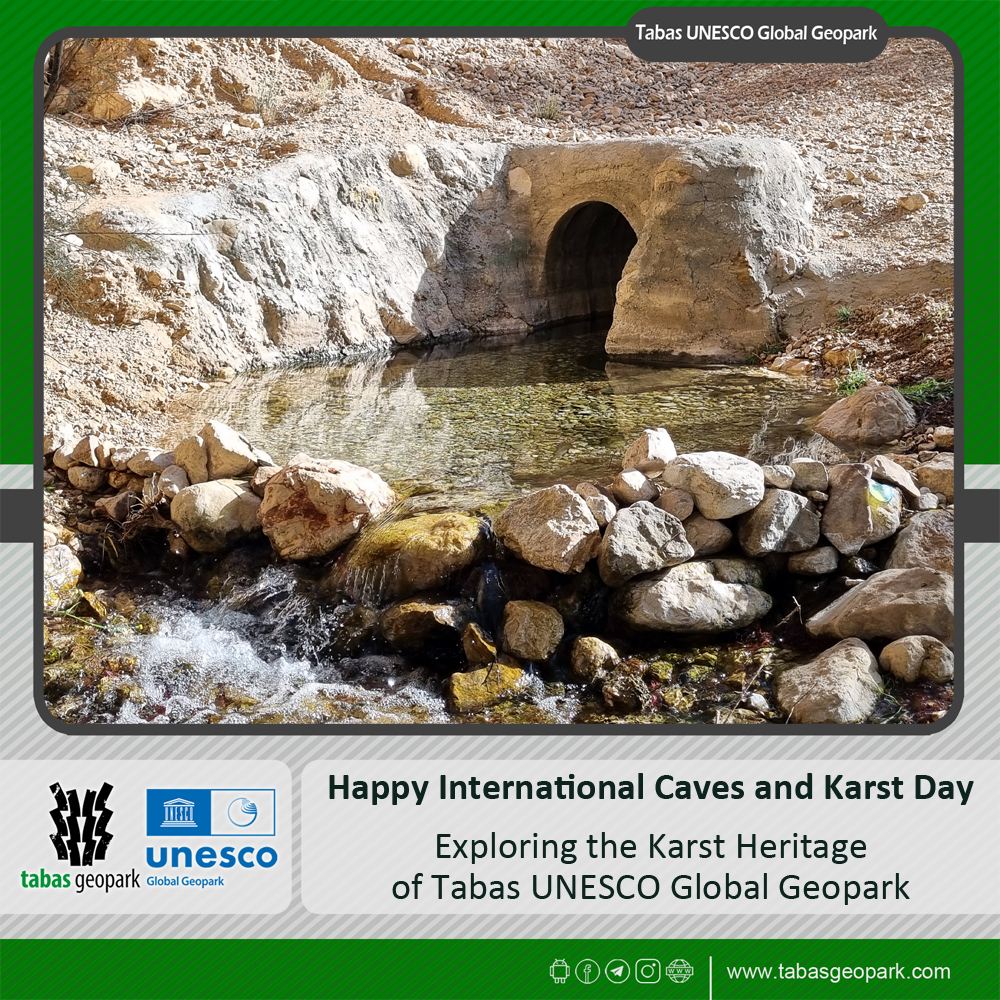
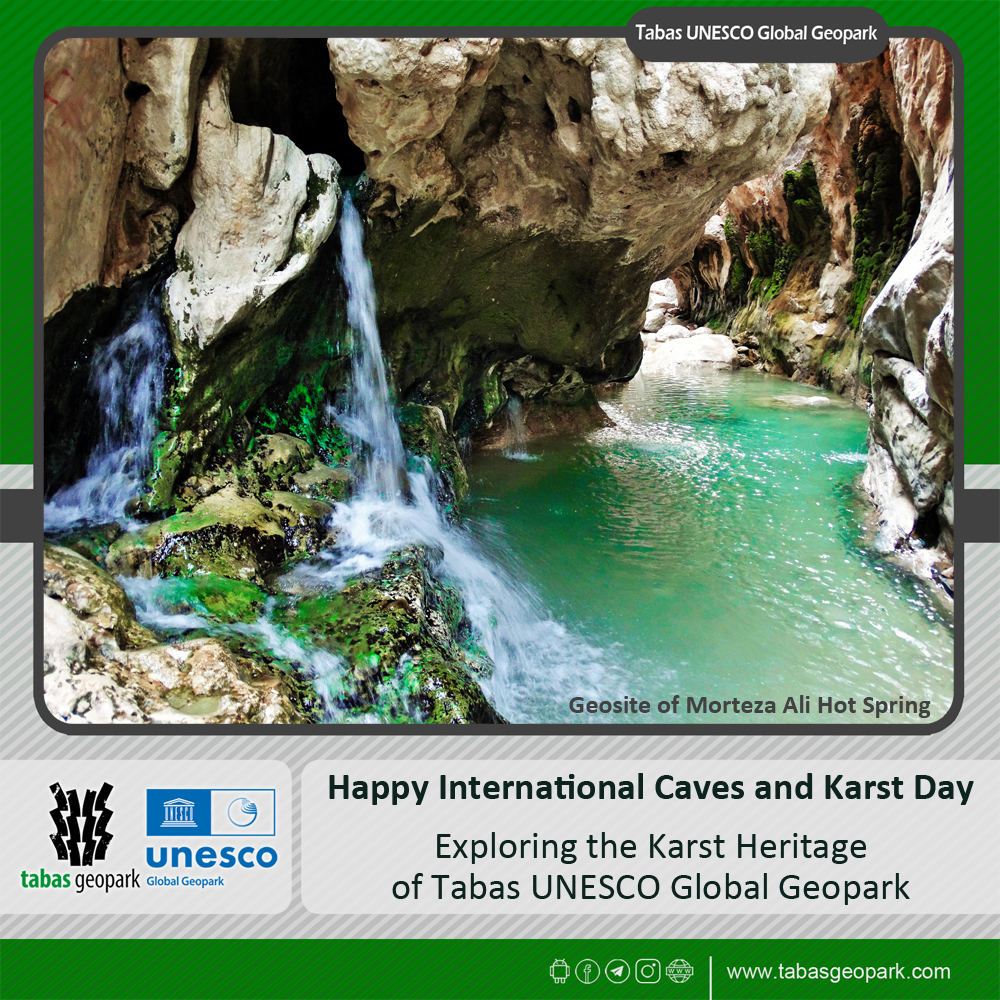
The karst features of Tabas are not limited to mountains and caves. Morteza Ali Hot Spring and Qanbar Qanat are interesting examples where the relationship between carbonate rocks, geological structures, groundwater flow, and the emergence of water at the surface can be explored.
This relationship is particularly significant in the arid and desert climate of Tabas, where geological processes and groundwater systems have played an important role in shaping ecosystems and sustaining human life.
Karst in Tabas UNESCO Global Geopark is not necessarily expressed through spectacular cave systems. Its traces can also be followed through the Shotori Mountains, caves, groundwater pathways, springs, and qanats.
Tabas UNESCO Global Geopark — where the story of karst begins within the rocks and ultimately connects to water and life.