When Today’s Desert Was Once a Warm and Living Sea
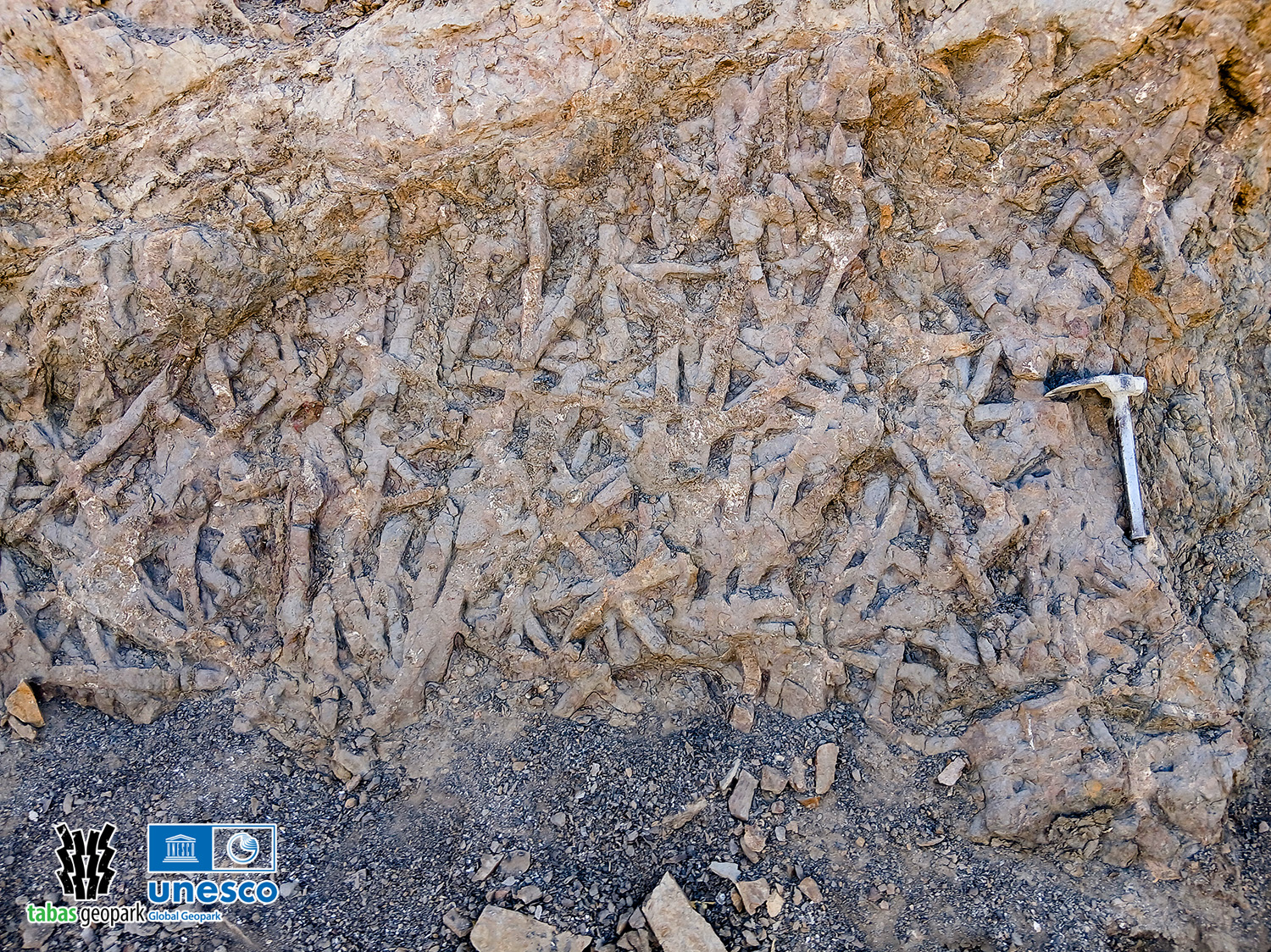
In the heart of today’s desert, near the beautiful village of Kharv, 24 km east of Tabas, lies astonishing evidence of a warm and vibrant sea that existed around 330 million years ago. Here, ancient burrowing creatures left their traces of life forever preserved in stone.
The trace fossil Thalassinoides represents a network of horizontal tunnels and burrows created on the seafloor of shallow marine and coastal environments during the Carboniferous Period. The trace makers included crustaceans such as shrimps and crabs, as well as polychaete worms and burrowing echinoderms- organisms that dug into the soft seabed in search of shelter and food.
At that time, Iran lay in the Southern Hemisphere, along the northern margin of the Gondwana supercontinent, and the Kharv region was submerged beneath the warm waters of the Palaeotethys Ocean. The climate was mostly tropical and humid, though global glaciations during the early Carboniferous occasionally affected parts of this vast region.
Today, Tabas and Kharv are among the few regions in Iran where Carboniferous sediments and fossils have been almost completely preserved. The Kharv Fossil Geosite thus opens a window into Earth’s deep past – where, amid the silence of the desert, the ancient whispers of long-lost seas can still be heard.
Other Attractions Nearby
In addition to the Kharv Fossil Geosite, visitors can explore the mountain village of Kharv, visit the historic village castle, and admire the majestic ancient cypress trees. They can discover the Geosites of Shotori Mountain and Kal-e-Sardar, tour the ancient Gaber houses, relax at the Morteza Ali Hot Spring, and see the ancient Shah Abbasi Arch, one of the remarkable achievements of ancient dam engineering. Visitors can also observe the rock carvings and enjoy the natural beauty of the Senou Forest, mountain almond habitat, and Anghozeh (Asafetida) habitat. Additionally, they can examine the Mahour Ghalandar sedimentary succession (Devonian-Carboniferous boundary).
All of these attractions are nestled within a unique and pristine natural landscape, offering visitors an extraordinary opportunity to travel back in time, appreciate the Earth’s natural beauty, and explore the history and heritage of the region.