Khan Caravansary UNESCO World Heritage Site and Geosite:
A Desert Jewel on the Ancient Trade Route
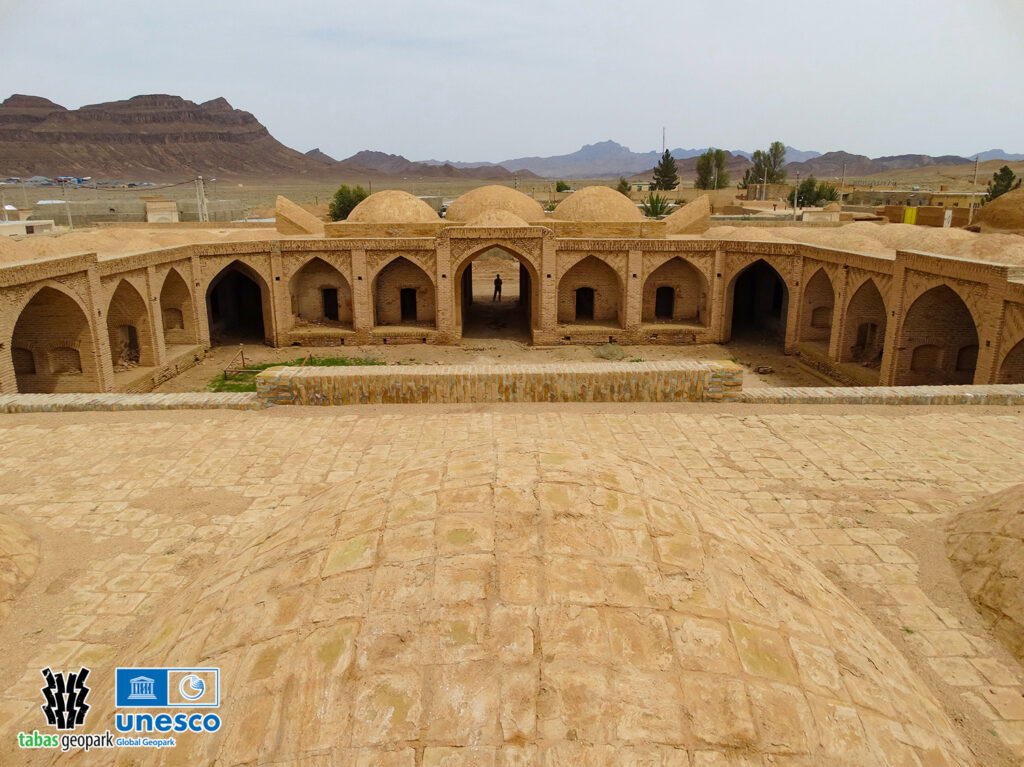
Amid the vast desert plains and along the old Tabas-Yazd road, stands the serene and elegant Khan Caravansary, located in the village of Robat-e-Khan, about 110 kilometers east of Tabas.
In the past, this site was of great importance to travelers, as it served as the last stop with abundant water before entering the deep desert.
Historically, three caravanserais once existed in Robat-e-Khan, reflecting the vital role of this location in Iran’s trade and pilgrimage routes. Whenever one structure was damaged, another was built in its place — evidence of the necessity of such havens in the harsh desert landscape.
Historical accounts also mention this region. It is said that Tamerlane (Timur), the founder of the Timurid Empire, passed through Robat-e-Khan on his journey toward Fars and described it as the last place where water could be found in abundance before crossing the arid expanse.
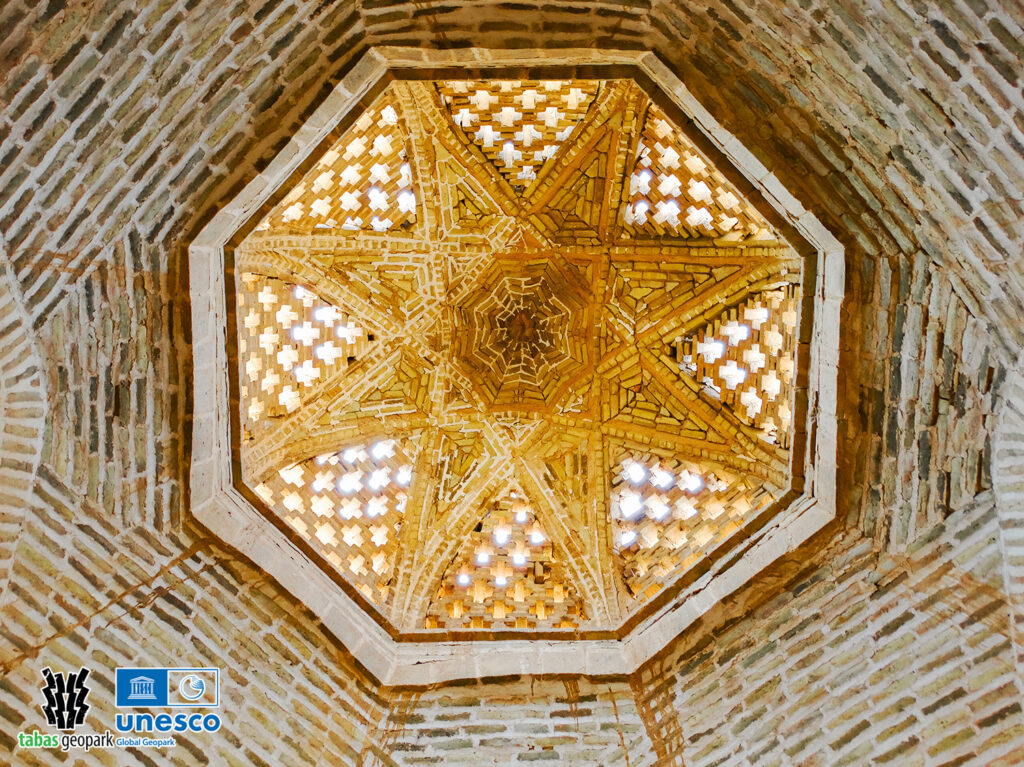
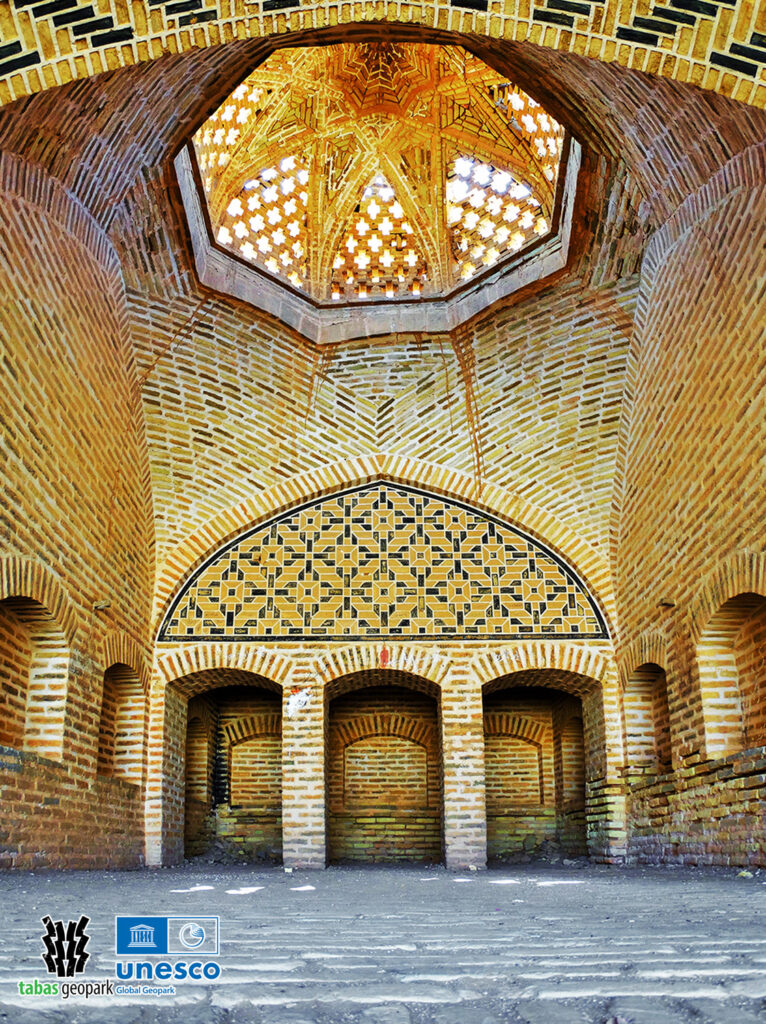
The Khan caravansary, dating back to the Qajar period, covers an area of about 1,959 square meters. Its architectural design – featuring a beautiful windcatcher (Badgir), a domed royal chamber (Shah-Neshin), and harmoniously proportioned spaces – showcases the ingenuity of Iranian architects in adapting to desert climates. Its layout closely resembles that of the Kalmarz Caravansary, highlighting the artistic unity of this historic route.
Recognized for its cultural and architectural significance, Khan Caravansary was inscribed on the UNESCO World Heritage Site on September 16, 2023, as part of the “Persian Caravansary,” symbolizing the spirit of travel, resilience, and harmony between humans and the desert.