A Journey to an Ancient Sea in the Heart of the Desert
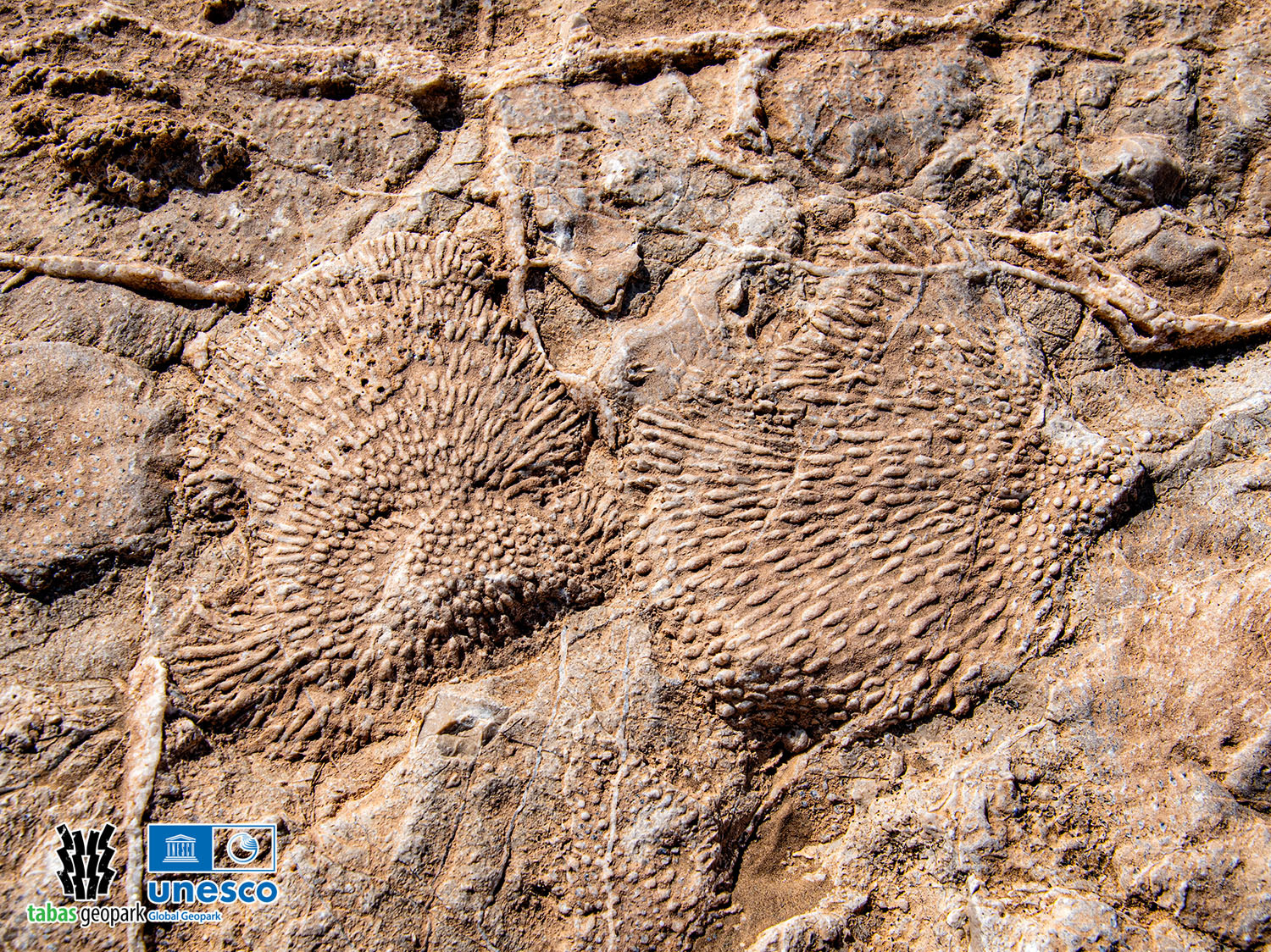
The Malvand Jurassic Corals Geosite, located 72 km north of Tabas along the Tabas–Boshruyeh road, is one of the most remarkable geological heritages of Tabas UNESCO Global Geopark. Here, the fossilized remains of marine organisms dating back approximately 150–160 million years reveal the story of Earth’s distant past.
During the Jurassic Period, the region that today encompasses the desert and mountainous landscapes of Tabas was once part of a warm, shallow sea. In this ancient marine environment, corals built calcareous skeletons and formed coral reefs and diverse marine habitats. Today, the fossilized remains of these organisms can be observed within the rock layers around Malvand, preserved as columnar, branching, and network-like structures.
This geosite provides a unique opportunity to explore traces of life from millions of years ago and to understand the environmental changes that have shaped our planet through time. Here, every piece of rock tells a story of an ancient ocean. Due to its outstanding scientific and natural significance, the Jurassic Corals of Malvand Geosite has been registered as a National Natural Heritage Site of Iran, emphasizing the importance of protecting this valuable geological heritage.
Other Attractions of Malvand
In addition to its remarkable coral fossils, Malvand Village offers a variety of natural and cultural attractions. Its beautiful landscapes, mountainous scenery, agricultural and garden products, medicinal plants, wildlife, traditional breads, and the warm hospitality of local communities make it an attractive destination for visitors interested in nature, geology, and culture. Other attractions of the village include the ancient Malvand Castle, the famous Hassan Sabbah Castle Cave, and the village dam.
A visit to Malvand is a journey into the distant past, where the traces of an ancient sea can be discovered within the rocks.